BOTTOM GUIDE – An essential part of a sliding door system
What is a bottom guide and why is it needed?
Top-hung sliding door systems MUST ALWAYS be equipped with a bottom guide. The purpose of the bottom guide is to direct the sliding door along the track line, improving both operational smoothness and safety. It also prevents the door from twisting or swinging during use. Without a bottom guide, the door hangers inside the top track can be subjected to excessive lateral stress, which can damage the track system, impair the door’s movement, and significantly shorten its lifespan.
Only one bottom guide is required per sliding door leaf, as its sole purpose is to direct the door’s movement—not to support the door’s weight or absorb heavy lateral forces such as wind loads.
Types of bottom guides and how to install them?
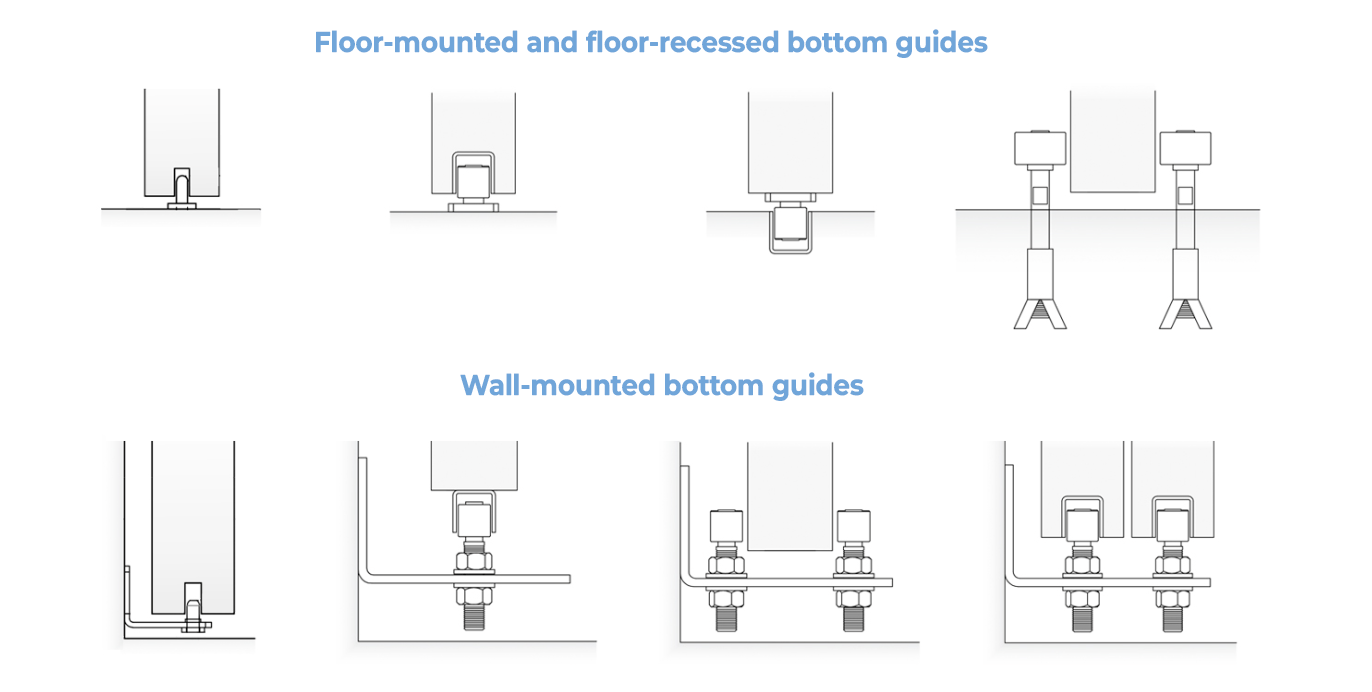
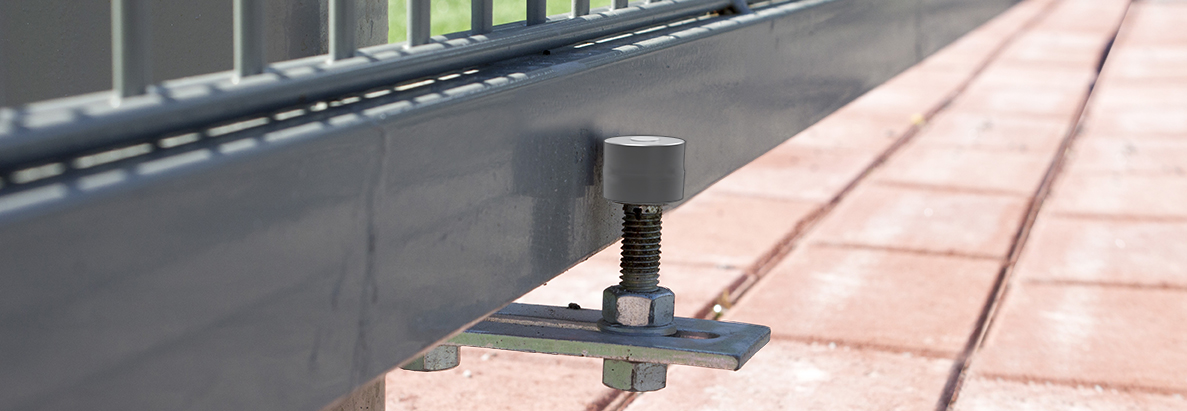
Bottom guides are typically floor- or wall-mounted pins or bearing-equipped rollers. The bottom guide must be installed so that the sliding door remains engaged with it throughout its entire range of motion. Track stops can be used to limit door movement, ensuring the door stays guided at all times.
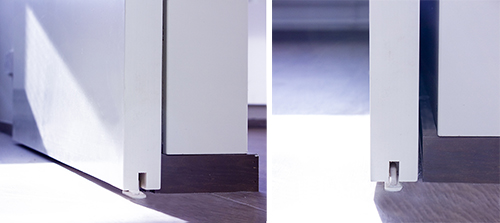
The bottom guide is usually installed next to the door opening so that it remains hidden while keeping the doorway completely clear and unobstructed. Particularly with interior sliding doors, it is common practice to router a groove along the bottom edge of the door leaf where the guide slides. Because the door leaf is slightly wider than the opening, the guide stays neatly concealed inside the groove next to the doorway.
Alternatively, a U-profile bottom guide channel can be installed along the bottom edge of the door—either recessed into a routed groove or surface-mounted using screws or welding. A bottom guide channel allows the use of a heavy-duty roller guide and strengthens the door structure. The profile itself can even serve as the bottom beam of a steel-framed door, saving raw material costs. Using a bearing-equipped roller guide reduces friction and ensures an even smoother slide.
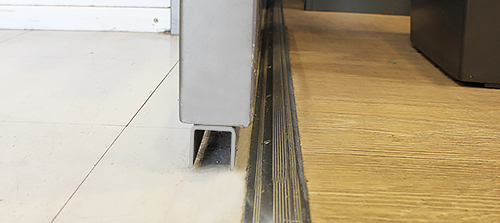
The bottom guide channel can also be recessed directly into the floor or ground. In this setup, the guide roller is attached to the bottom of the sliding door, and the floor channel runs the full length of the door’s travel path, enabling reliable guiding even in demanding installations. However, please note that a floor-recessed track disrupts a continuous floor surface indoors and can collect dirt and ice outdoors. In certain installations, this approach is unavoidable; folding doors, for example, always require a floor-mounted guide track due to the movement pattern of the door leaves. Bottom guiding for double or triple parallel track systems varies by case depending on available mounting structures—please consult our expert sales team for recommendations.
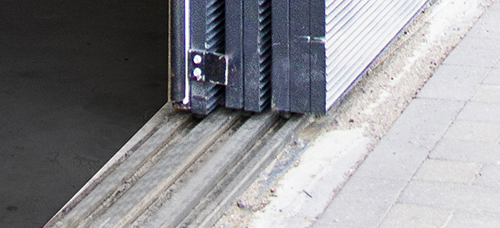
Below are a few examples of bottom guide installation methods: